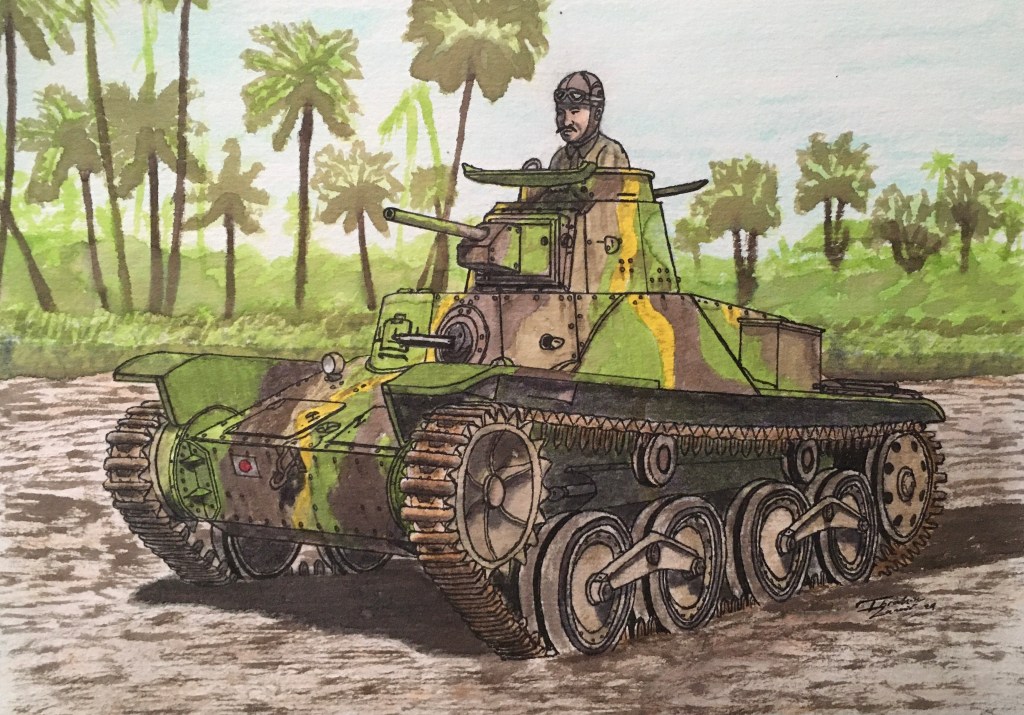
Developed in the early-1930s to provide infantry support, the Ha-Go was Japan’s most widely-produced armoured vehicle of WWII. Its light weight and speed were effective in the early stages of the war, but it was eventually outclassed by heavier Allied armour.
The Ha-Go formed the basis of several variants, including the Ka-Mi amphibious tank. Experience with disruptive sorghum grass in Manchuria led to the ‘Hokuman’ version, which inverted the suspension and added small rollers for better movement.
Specifications
Armament: 37mm Type 94 or Type 98 gun (later models); Armour: 9-12 mm (0.39-0.47 in); Crew: 3; Engine: Mitsubishi NVD 6120 6-cylinder diesel engine, 120 hp (89 kW); Maximum speed: 45 km/h (28 mph); Secondary armament: 2x 6.5 mm Type 91 or 7.7 mm Type 97 machine guns
By Ibrahim Zamir
 Empire of History